
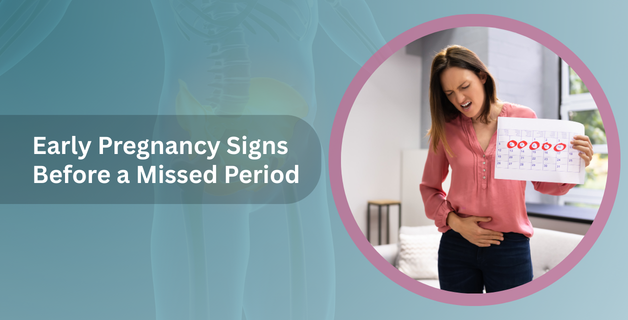
For many women, pregnancy only feels real when a period doesn’t arrive. But in truth, your body may begin changing days before that date on the calendar.
You might feel slightly more tired than usual. Your breasts may feel tender. Maybe your mood feels different, or certain smells suddenly bother you. These small, early changes can happen even before a missed period — and they’re often easy to dismiss as PMS.
If you’re trying to conceive, you may notice every tiny shift in your body. If the pregnancy is unexpected, those early symptoms can feel confusing. Because early pregnancy signs can closely resemble normal hormonal changes, consulting a gynecologist can provide clarity, reassurance, and accurate testing when needed.
Can You Feel Pregnancy Symptoms Before a Missed Period?

Yes, some women can.
After fertilization, your body begins producing pregnancy hormones like hCG and progesterone. These hormones start working quietly in the background, and for some women, the effects are noticeable within a week or two after ovulation.
However, every woman’s experience is different:
Some notice multiple symptoms early on.
Some feel only mild changes.
Some feel nothing unusual at all.
What often matters most is noticing symptoms that feel slightly different from your usual premenstrual pattern. If something feels “off” in a new way, it’s worth paying attention.
Think you might be pregnant? Schedule your early pregnancy consultation today for accurate testing and expert guidance.
What Are Some Less Common Signs of Early Pregnancy?
While nausea and fatigue are commonly discussed, early pregnancy can show up in subtle ways that aren’t talked about as often.
Implantation Bleeding
Light pink or brown spotting may occur 6–12 days after ovulation when the fertilized egg attaches to the uterus. It’s usually lighter and shorter than a regular period.

Mild Cramping
Some women feel gentle pulling or tingling sensations in the lower abdomen during implantation.
Metallic Taste in the Mouth
A strange metallic taste is an unusual but possible early hormonal effect.
Increased Sensitivity to Smell
Suddenly finding certain smells overwhelming — even ones you normally tolerate — can be an early sign.
Breast Changes
Breasts may feel fuller, tender, or heavier. The areolas may darken, and veins may become more visible.
Unusual Fatigue
This isn’t just normal tiredness. Early pregnancy fatigue can feel overwhelming, even if you’ve slept well.
Frequent Urination
You may notice more frequent trips to the bathroom due to increased blood flow and hormonal shifts.
Mood Swings
If your emotions feel stronger than your typical PMS — whether it’s irritability or sudden tears — hormones could be playing a role.
Individually, these signs may not confirm pregnancy. But when several appear together, they can offer helpful clues.
Early Pregnancy Symptoms vs PMS – How to Tell the Difference
One of the biggest challenges is that early pregnancy and PMS feel very similar.
Both can cause:
Breast tenderness
Bloating
Mild cramping
Mood changes
Fatigue
However, there are subtle differences:
Pregnancy fatigue often feels deeper and more persistent.
Implantation spotting is lighter than menstrual bleeding.
Breast soreness may feel fuller and last longer.
Basal body temperature staying elevated beyond two weeks can suggest pregnancy.
If your symptoms feel stronger or different from your normal cycle, it may be time to take a pregnancy test or consult a gynecologist for confirmation.
When Should You Take a Pregnancy Test?

It’s natural to want answers immediately. However, testing too early can lead to false negative results because hCG levels may not yet be high enough.
For the most reliable result:
Take a home pregnancy test after your missed period.
Use the first morning urine sample.
If negative but symptoms continue, repeat the test after 2–3 days.
A blood test (beta-hCG) can detect pregnancy earlier and more accurately. If you’re unsure, visiting a gynecologist ensures proper evaluation and guidance from the very beginning.
Book an appointment with an experienced gynecologist to begin safe, personalized prenatal care from the start.
Conclusion
Early signs of pregnancy before a missed period can be subtle and deeply personal. Some women sense changes immediately, while others notice nothing unusual at all.
If your body feels different, trust that instinct. Early confirmation allows you to begin prenatal care, start folic acid supplementation, and make healthy lifestyle choices as soon as possible.
And if you’re uncertain, professional medical guidance can provide clarity, reassurance, and peace of mind during this important time.
Frequently Asked Questions
1. Can pregnancy symptoms start 5 days before a missed period?
Yes, some women may notice fatigue, mild cramping, or breast tenderness even a few days before their expected period.
2. Is implantation bleeding common?
Not all women experience it, but light spotting can occur in early pregnancy.
3. Can PMS feel exactly like pregnancy?
Yes, because both are influenced by hormonal changes. A pregnancy test is the only way to confirm.
4. How early can a blood test detect pregnancy?
A blood test can usually detect pregnancy about 7–10 days after ovulation.
5. When should I see a gynecologist?
If you experience severe abdominal pain, heavy bleeding, dizziness, or persistent symptoms, seek medical attention promptly.