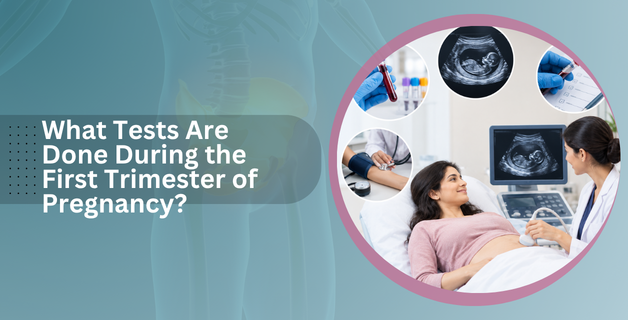
Weeks 1 to 13 make up the first trimester, and a fair number of checks happen in that stretch. Doctors usually run routine blood work, a urine test, a few ultrasounds and a genetic screening to see how you and the baby are keeping. These first trimester tests confirm the pregnancy, flag common problems before they grow and show how your baby is developing. The exact list differs from woman to woman, so it helps to know what each test is for.
According to Dr. Himali Maniar, Gynecologist at Nisha Women’s Hospital, Bopal, “Many women are surprised by how many tests come in the first few weeks. Each one has a purpose. Some check your health, some check the baby’s development, and the screening tests estimate risk rather than give a diagnosis. Before any test, we tell you what it’s for and what the result will and won’t tell you.”
Which Routine Tests Does the First Prenatal Visit Include?
Your first visit under antenatal care is mostly about getting a starting picture. The doctor asks about your medical history, checks your blood pressure and weight, and orders a few routine tests.
Blood tests: The usual ones are haemoglobin and a complete blood count (to look for anaemia), blood group with Rh factor, and blood sugar. You’ll also be screened for infections like HIV, hepatitis B and syphilis, and a lot of doctors check your thyroid too.
Urine tests: You’ll be asked for a urine sample so the lab can check for infection, protein and sugar. Infections are common in pregnancy and often give no symptoms, so this one is worth doing.
Your own history: Your doctor may add a test or leave one out depending on your health, so your list needn’t match a friend’s.
Which Ultrasounds Are Done in the First Trimester?
Two scans are common, and they do different jobs.
The dating scan: Done around weeks 6 to 9, it confirms the pregnancy is in the right place, looks for the baby’s heartbeat and fixes your due date more accurately.
The NT scan: Done between 11 weeks and 13 weeks plus 6 days, it measures the clear fluid at the back of your baby’s neck. It’s quick and painless.
If you’re still unsure whether you’re pregnant, our guide to very early signs of pregnancy is a useful read.
What Is First Trimester Screening?
First trimester screening puts two things together: the NT scan and a blood test called the double marker test. The blood test measures two pregnancy hormones, free beta-hCG and PAPP-A. Your doctor then combines these results with the scan measurement and your age to estimate the chance of Down syndrome, trisomy 18 and trisomy 13.
It’s a screening, not a diagnosis. A high-risk result means more testing is worth considering. It doesn’t mean your baby has a problem.
It’s optional. Most doctors recommend it, but the choice is yours.
It works best as a pair. The blood test is usually done between 10 and 13 weeks, around the same time as the NT scan.
What Determines Which Tests You Need?
No two pregnancies get exactly the same set of tests.
Your history: A past miscarriage, diabetes, a thyroid problem or high blood pressure can all mean a few extra tests.
Your age: Women aged 35 and above are often offered more detailed screening.
Twin pregnancy: Carrying twins requires a different schedule of scans and screening to monitor both babies’ development.
Early findings: If a result looks off, the doctor may repeat it or add another test. When that happens, ask about high-risk pregnancy care early to ensure you receive the right monitoring and support.
Key Takeaways
The first 13 weeks of pregnancy typically involve blood tests, a urine test, ultrasounds and genetic screening.
First trimester screening pairs the NT scan with the double marker blood test.
Screening estimates risk. It doesn’t confirm a diagnosis.
Which extra tests you need depends on your history, your age and how the early results look.
Your doctor should explain each test and what its result means.
Frequently Asked Questions
What tests will I have in the first trimester of pregnancy?
When is first trimester screening done?
Do I have to get first trimester screening done?
Does a high-risk result mean there’s something wrong with my baby?
References
1.ACOG – Prenatal Genetic Screening Tests
Explains first-trimester screening, including nuchal translucency ultrasound and maternal blood tests for assessing the risk of chromosomal conditions.
2. NHS – Screening Tests in Pregnancy
Provides an overview of antenatal screening, including blood tests, ultrasound scans, and screening for certain genetic and infectious conditions.
Disclaimer
This blog is intended for informational purposes only and should not be taken as medical advice.