
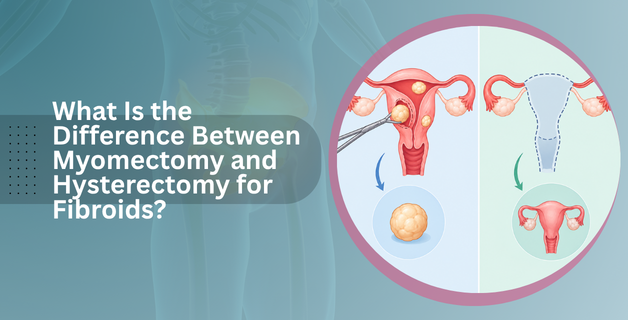
A myomectomy takes out the fibroids and leaves the uterus in place. A hysterectomy takes the uterus itself, fibroids and all. That’s the core difference, and it’s where most of the confusion around myomectomy vs hysterectomy actually starts. Both treat fibroids effectively. But they lead to very different outcomes for fertility, recovery, and whether the condition can come back at all.
According to Dr. Himali Maniar, Gynecologist in Bopal, “Patients often think of these as interchangeable options. They’re not. One preserves your reproductive future. The other closes that door permanently. The right choice depends entirely on what you actually want out of treatment.”
When Does Myomectomy Make More Sense?
Myomectomy usually comes up first when fertility’s still part of the picture.
- You want to keep your fertility options open: Removing just the fibroids leaves the uterus intact, so a future pregnancy stays possible.
- Fibroids are few and well-placed: Fewer fibroids in easier-to-reach spots make for a cleaner removal.
- Symptoms don’t require full removal: Heavy bleeding or pelvic pressure often gets resolved without taking out the whole organ.
- Minimally invasive options apply: Laparoscopic or hysteroscopic myomectomy means smaller cuts and quicker recovery. Not every case qualifies, though.
Our myomectomy treatment program is built around exactly this kind of fertility-first planning.
When Should Hysterectomy Be the Better Option?
Hysterectomy tends to make more sense once fertility’s no longer the goal.
- Childbearing is done: Take out the uterus, and there’s no chance of fibroids coming back. Myomectomy can’t promise that.
- Fibroids are extensive or deeply embedded: A large number of fibroids can make keeping the uterus impractical.
- Fibroids keep returning: If they’ve grown back after a previous myomectomy, that often tips the decision toward hysterectomy.
- Bleeding won’t respond to anything else: When other treatments have already failed, hysterectomy gives a definitive fix instead of another round of trial and error.
Not sure if your symptoms have crossed that line yet? Our blog on signs for hysterectomy breaks down what typically points toward this decision.
Why Choose Dr. Himali Maniar for Fibroid Treatment?
Dr. Himali Maniar has over nine years of experience in gynecology, obstetrics, and urogynecology at Nisha Women’s Hospital, Bopal. She’s handled both myomectomy and hysterectomy cases using minimally invasive techniques wherever clinically appropriate.
Her approach starts with an honest conversation about your fertility goals. Not a default answer handed out to every patient. Because that distinction matters. The wrong call here can mean losing fertility unnecessarily, or facing a repeat surgery down the line.
Call 9081233800 to book your consultation.
Wondering which option actually fits your fibroid case?
Frequently Asked Questions
Is myomectomy safer than hysterectomy?
Both are safe. Risk really comes down to your own health factors.
Can fibroids return after a myomectomy?
Yes, especially if you had multiple fibroids to begin with.
Does hysterectomy stop periods immediately?
Yes. Once the uterus is gone, periods stop for good.
Which recovery is faster, myomectomy or hysterectomy?
Minimally invasive myomectomy usually wins on recovery time.
References
- Perioperative morbidity associated with abdominal myomectomy compared with total abdominal hysterectomy — directly compares surgical morbidity between the two procedures.
PubMed – Myomectomy vs Hysterectomy Morbidity
2.Cleveland Clinic — Myomectomy: https://my.clevelandclinic.org/health/treatments/15448-myomectomy
Disclaimer
This blog is intended for informational purposes only and should not be taken as medical advice.