
Very early signs of pregnancy at 1 week are a common search, and the answer surprises most people. At week one, you’re usually not pregnant yet. Doctors count from the first day of your last period, so week one is the bleeding itself. Ovulation hasn’t happened, and nothing has been conceived.
An early scan and a simple health check can help you understand what to expect in the first few weeks of pregnancy.
— Dr. Himali Maniar
What “1 Week Pregnant” Actually Means
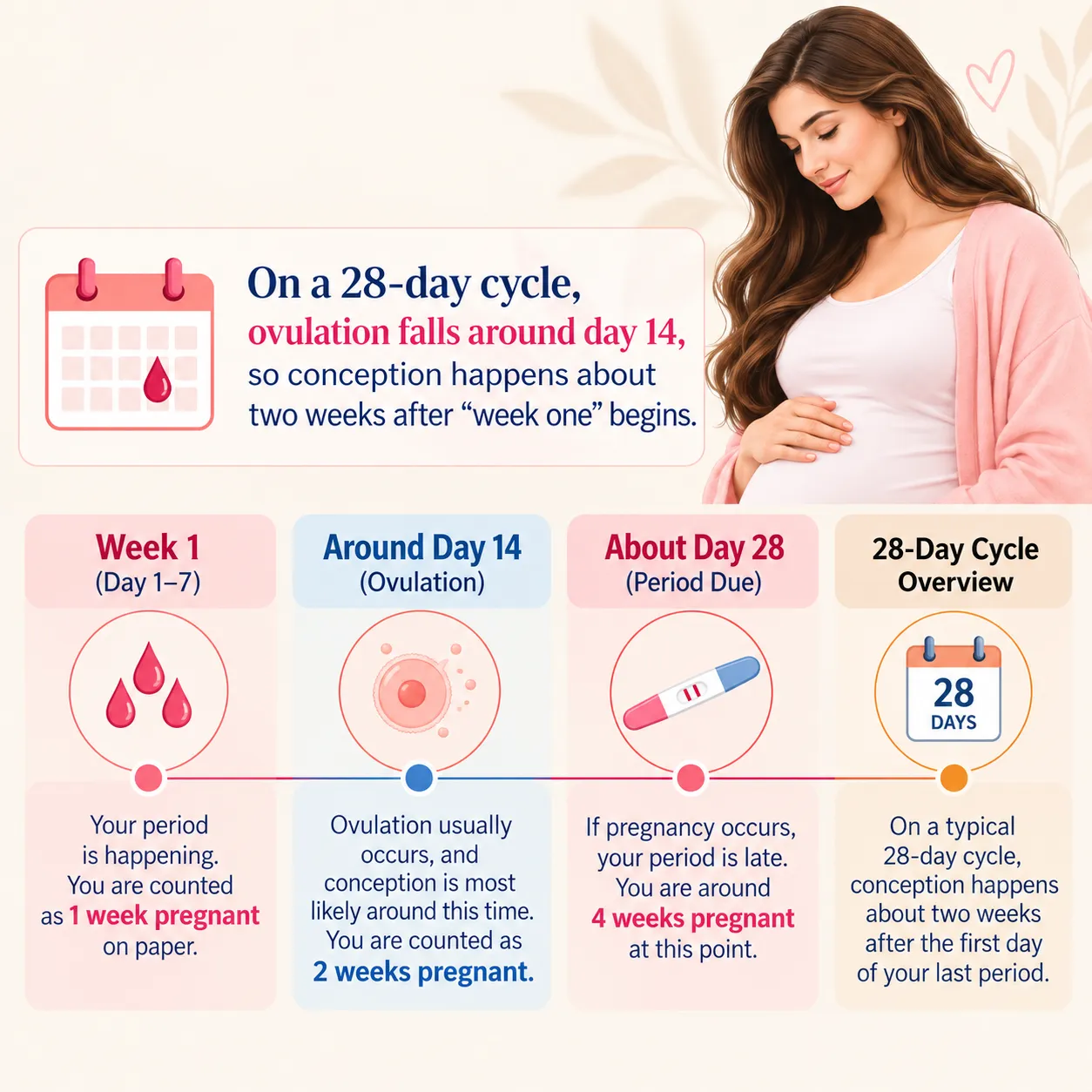
Ever wondered why you’re called 4 weeks pregnant when you’ve only just missed your period? It’s because doctors count from the day your last period began, not when you conceived. In a 28-day cycle, the egg is usually released around day 14. But if your periods don’t come on time every month, these dates can be a little different.
Missed your period or feeling a little different lately?
A gynecologist can help you understand what’s going on.
Can You Have Pregnancy Symptoms at 1 Week?

Wondering if those cramps or sudden tiredness could be early signs of pregnancy? At 1 week pregnant, it’s too soon for pregnancy symptoms. Your body only starts producing hCG, the pregnancy hormone, after implantation. So, what you’re feeling right now is more likely related to your period.
A positive pregnancy test can leave you with so many questions. Knowing which changes are normal and when to get checked can make those first few weeks less confusing.
— Dr. Himali Maniar
Early Signs That Can Appear Around Implantation
- Light spotting. Pink or brown, lasting a few hours to two days. Implantation bleeding is generally lighter and shorter than a period.
- Mild cramping, more of a faint pull low in the belly than period pain.
- Breast tenderness that feels heavier or more sensitive than your usual premenstrual soreness.
- Unusual tiredness, driven by rising progesterone.
- Nausea. It often arrives closer to week six, so its absence tells you nothing.
Why Early Pregnancy Signs Are Easy to Mistake for a Period
Progesterone rises after ovulation, whether you’re pregnant or not. That’s why sore breasts, tiredness, and bloating can happen before your period as well as during early pregnancy. Both can feel so similar that it’s hard to tell them apart.
A few differences are useful to know:
- Bleeding pattern. Implantation spotting stays light. A period builds over a day or two and gets heavier.
- Cramp quality. Implantation cramps are mild and short, while period cramps tend to intensify.
- What happens next. PMS eases once bleeding starts. Pregnancy symptoms don’t, and they usually get stronger.
What to Do in the First Weeks If You Think You Conceived

The first few weeks after conception are when your body begins adjusting to pregnancy. A missed period, hormonal changes, and early symptoms may be the first clues. Pregnancy testing, folic acid, and healthy daily habits are important during this stage.
Every pregnancy deserves personalised attention.
Get the right guidance for a healthy start.
Frequently Asked Questions
1. Can you feel early signs of pregnancy at 1 week?
Nope, at that point, conception and implantation haven’t happened yet, so you won’t notice any symptoms.
2. What are the earliest signs of pregnancy before a missed period?
You might feel mild cramps, tender breasts, fatigue, or even some light spotting, but a lot of women don’t notice anything at all.
3. Is implantation bleeding different from a period?
Yeah, you might see some light spotting when implantation occurs, but it’s tough to tell if it’s that or just your regular period.
4. How soon can a pregnancy test detect pregnancy?
Home tests work best after you’ve missed your period, but blood tests can pick up pregnancy even earlier.
5. Why do early pregnancy symptoms feel like PMS?
It’s all about hormones, especially progesterone, which can cause similar feelings like tiredness and sore breasts.
References
- https://www.nhs.uk/pregnancy/trying-for-a-baby/signs-and-symptoms-that-might-mean-youre-pregnant/?utm_source=chatgpt.com
- https://my.clevelandclinic.org/health/body/22489-human-chorionic-gonadotropin?utm_source=chatgpt.com
- https://www.acog.org/clinical/guidance/committee-opinion/2017/05/methods-for-estimating-the-due-date?utm_source=chatgpt.com
- https://www.acog.org/womens-health/faqs/when-pregnancy-goes-past-your-due-date?utm_source=chatgpt.com